
By: Claire Caldwell ‘27
On Sept. 21, Ursuline Academy of Dallas warmly welcomed its sister school, Colegio Santa Ursula from Brazil, celebrating a vibrant exchange of culture and education between the two institutions. This is an important trip because it is Colegio Santa Ursula’s first trip to Dallas since the pandemic.
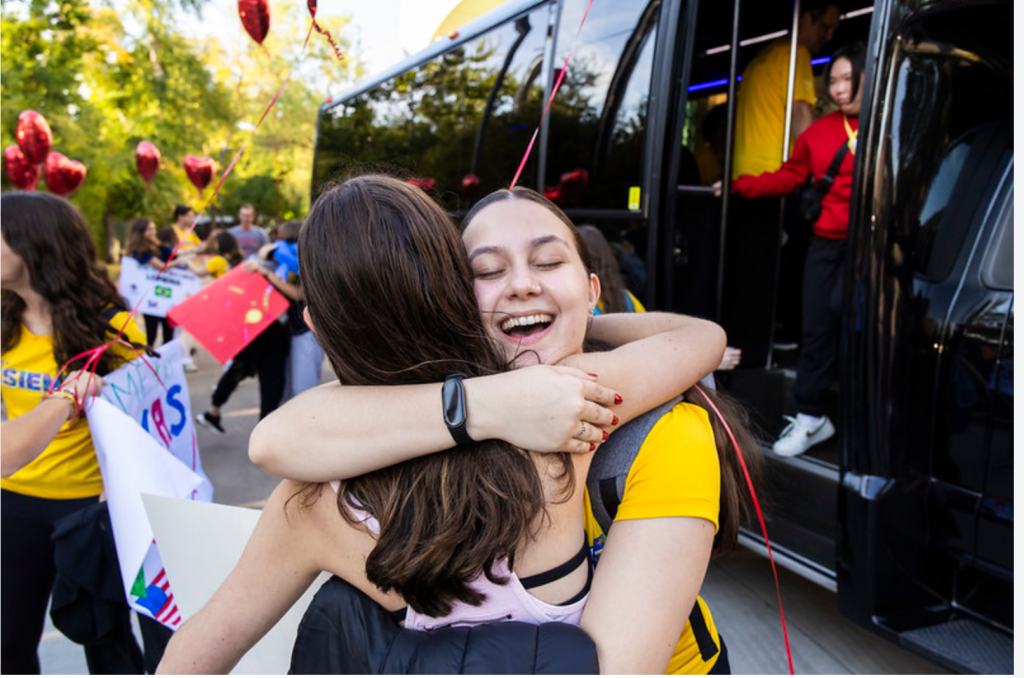
Colegio Santa Ursula teaches all grades with about 2000 students total but only the high school students are allowed to go on a delegation. Something different about this trip is that Colegio Santa Ursula is a co-ed school, bringing three boys along.
“All girls schools are not common where we live, so most schools have boys and girls,” said Lorena Cesco, a delegate from Brazil.
Without a doubt, traveling to a new country comes with culture shocks. Colegio Santa Ursula begins school at 7:20 a.m. and ends at 1 p.m., very different from Ursuline. Something else that is different about Colegio Santa Ursula is the uniforms the students wear.
“Our uniforms are not very strict; we wear a school t-shirt with leggings or jeans, and the boys can wear shorts. We are also allowed to wear open-toed shoes. I always come to school in my crocs or slippers,” said Cesco.
Coming to the United States, there were so many different food options to try. Many hosts took their sisters to typical American fast-food places.
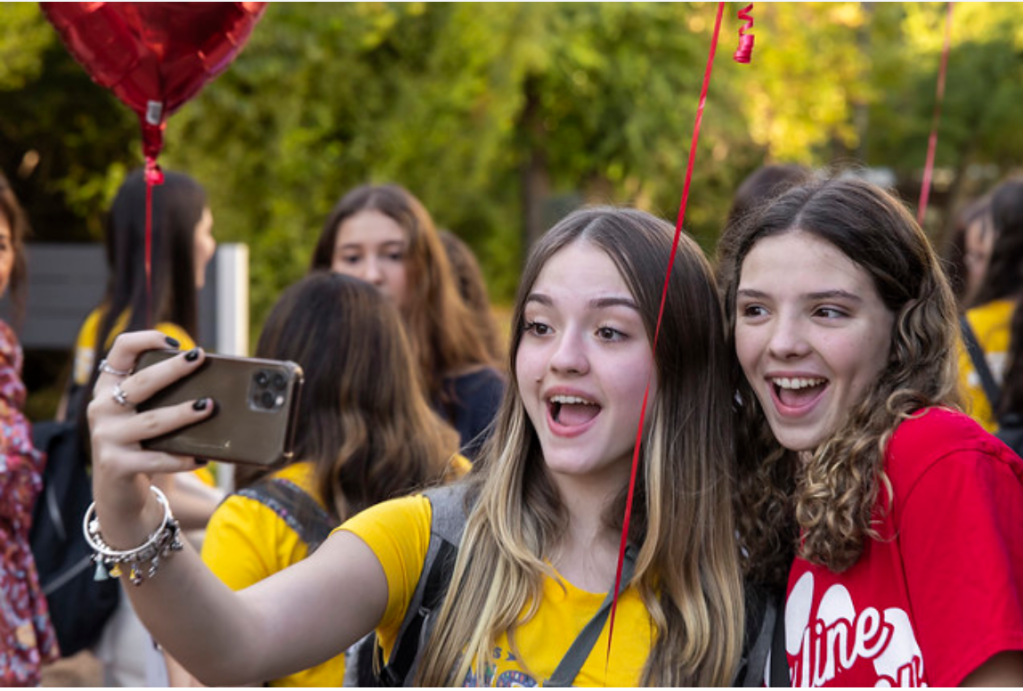
“I love the food here! It’s very different from what we have back home. I like Chick-fil-A, Dr. Pepper and Crumbl Cookie,” said Gabriela Mendes, another delegate from Brazil.
Something else that is always brought up is that everything here in Texas is bigger and people can drive when they turn 16. Host sisters took their delegates around Dallas, showing them a typical American high school experience.
“My host sister has taken me to a college football game, and I really enjoyed it! I thought it was very different, but I still had so much fun with my host sister and her family! I’ll never forget the experience,” said Lorena Daniel, a Brazilian delegate.
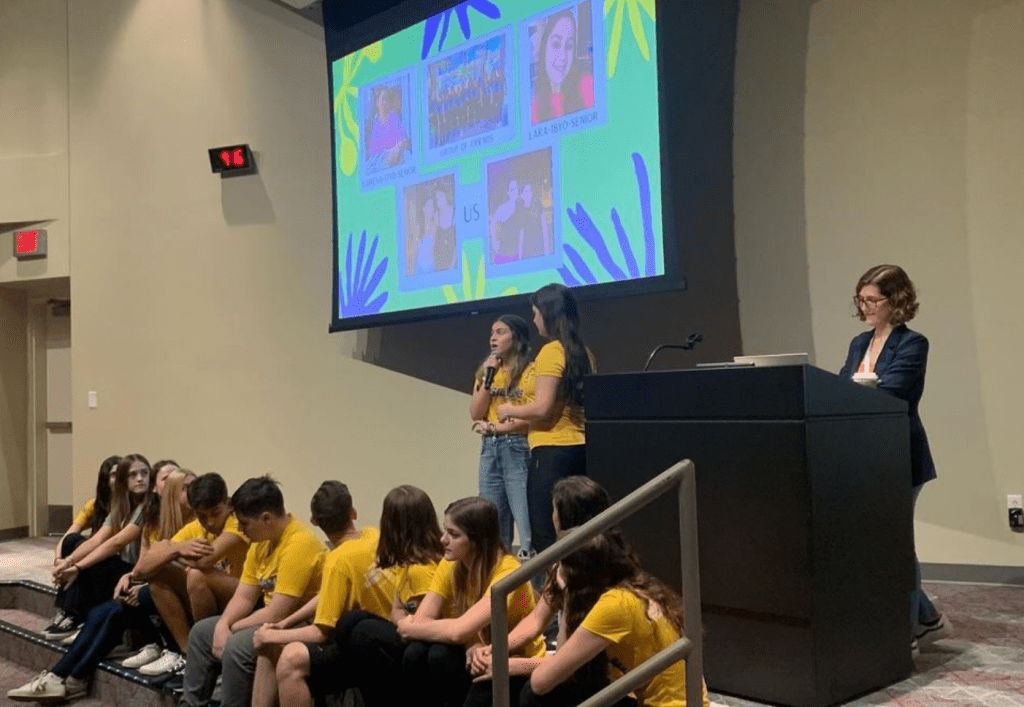
To educate Ursuline students about their life at home, the delegates gave a presentation in the Kiva about their school, country, traditional food, music and popular things to do in Brazil.
They talked about popular tourist sites such as Iguazu Falls, a beautiful waterfall divided between Argentina and Brazil. Iguazu Falls is taller than Niagara Falls and has even been in several Hollywood movies like “Indiana Jones and the Kingdom of the Crystal Skull” and “Miami Vice”.
“Brazil is split into five regions. The North, Northeast, Central-West, South and Southeast. The North Region is the largest region in Brazil, taking up 45.27% of the country’s total area,” said Lorenzo Terra, one of the boys from Brazil. They also talked about traditional foods in Brazil, such as coxinha, a well-liked Brazilian snack made with shredded chicken and mixed with a creamy cheese filling in dough and is shaped like a teardrop.
“Coxinha is my favorite snack! I always eat it with my lunch,” said Alice Hopp, a delegate from Brazil.
Feijoada is another popular Brazilian dish included in the presentation.
“Feijoada is a stew made mostly with black beans and salted and smoke meats such as pork and beef. It is savory and generally served over rice and is normally topped with toasted cassava flour with a side of sauteed collard greens and kale, and usually some citrus. It’s my favorite meal, and I definitely recommend trying it sometime,” said Guilherme Marconi, another one of the boys from Brazil.
On Sept. 27, the Brazilians enjoyed a nice American dinner consisting of burgers, hot dogs, Frito Pe and Texas Chili while watching “Apollo 13”.
On Sept. 30, the Brazilians left Dallas for Houston to check out NASA before returning home. Ms. Clark accompanied them after teaching them a physics lesson to prepare them for the famous space station.
Also on Sept. 30, Ursuline welcomed its sisters from the Ahliyyah & Mutran school in Amman, Jordan. The school just become co-ed last year, but this delegation is all girls.
Something interesting about the Jordan school is their weekends are Friday and Sunday, but Saturday is a half day. They speak Arabic and learn English but are offered French and German.
“My host sister’s name is Layan, and she told me the English classes they take are very advanced. They are not allowed to speak Arabic at all in the class and they analyze difficult texts, just like how we do, such as McBeth,” said Carolina Marquez, an Ursuline sophomore.
Ursuline’s tradition of international delegations has grown immensely and there are many more connections of sisterhood to come.
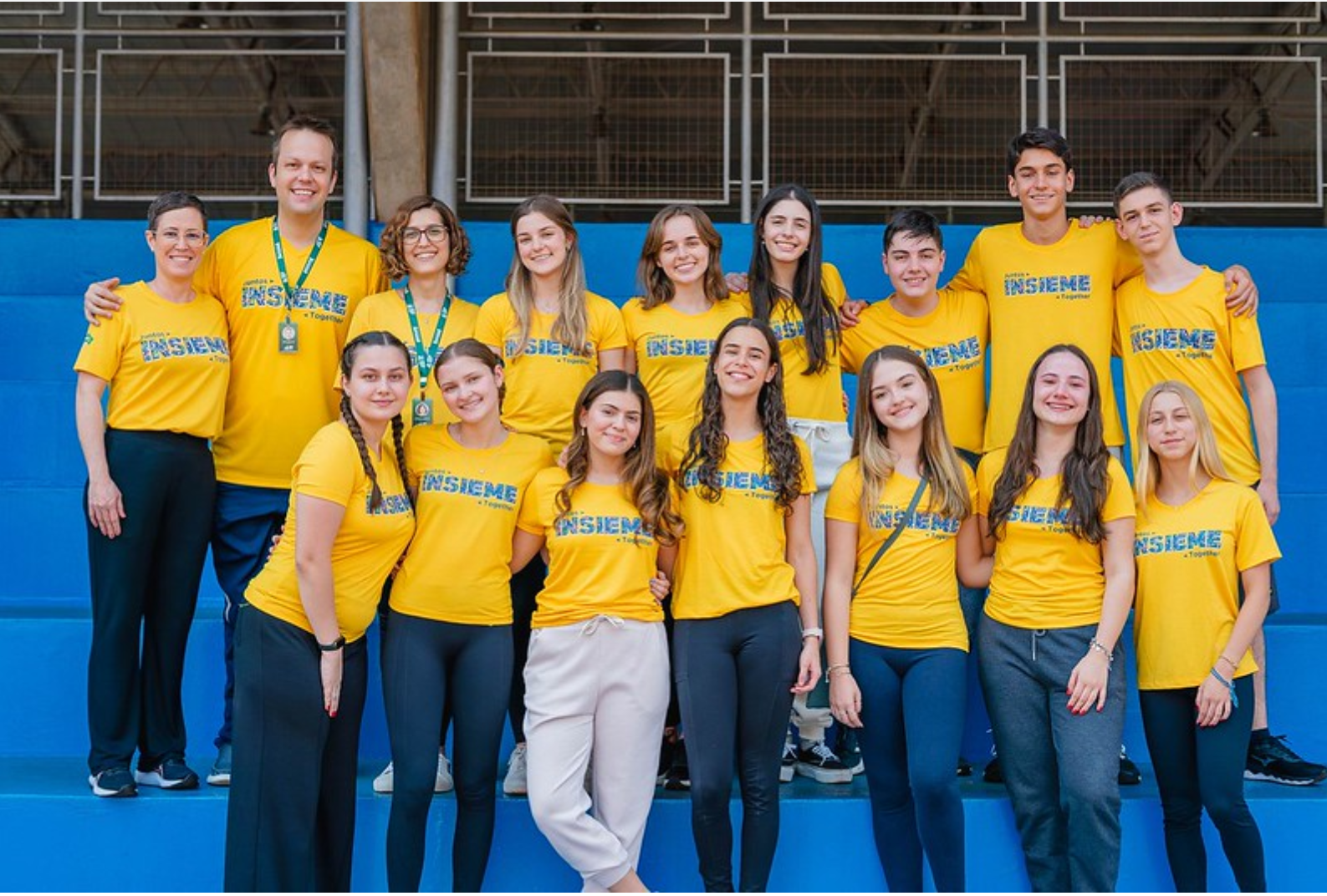
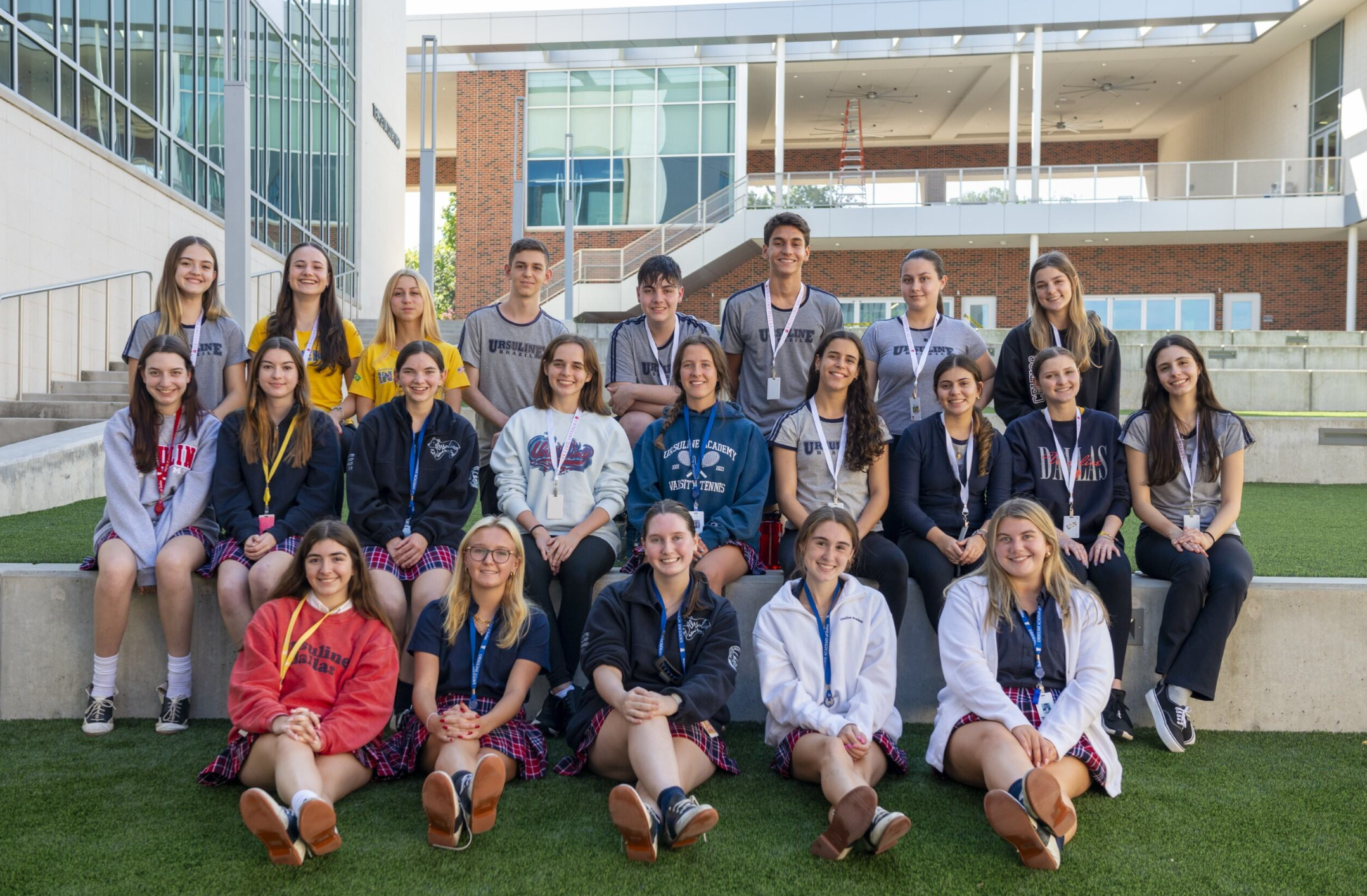
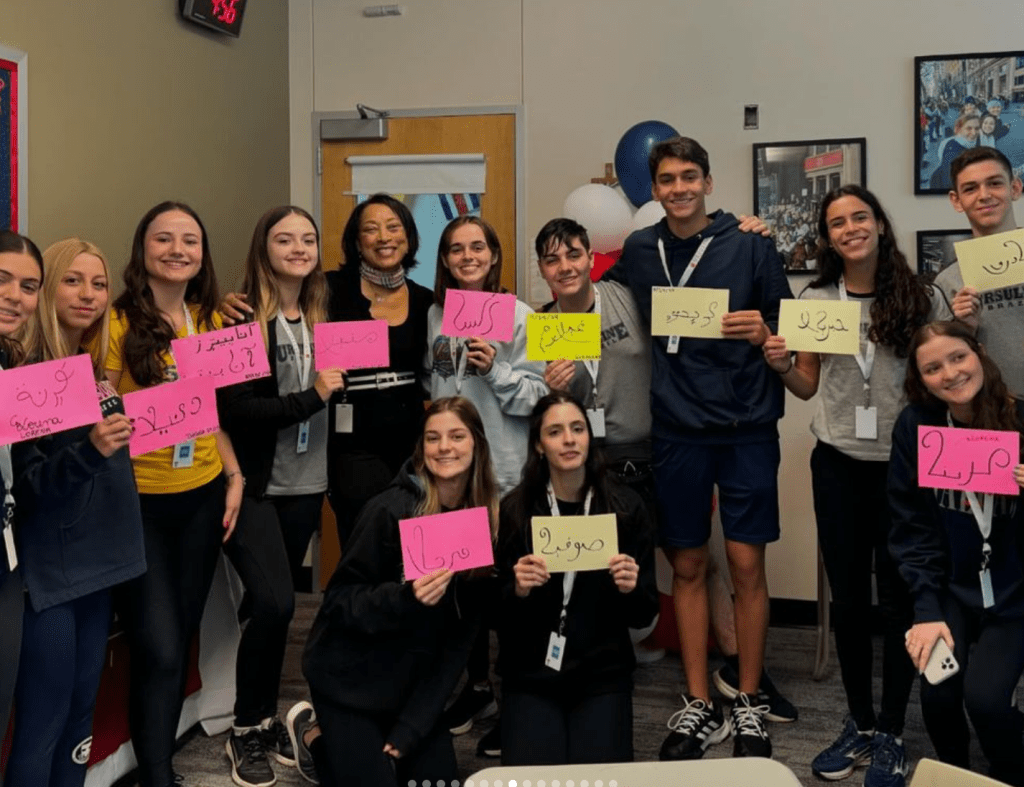
The Full Brazil Delegation and the Delegation with Ursuline Dallas’ Newspaper Journalism Class
 THE BEAR FACTS