
By Rohini Gopal ‘27
Frequently, you hear people asking, “What is that design on your hand?”. It was July 11th, 2024. I was in Fort Myers, Florida with my family getting ready for my uncle’s wedding. It was a momentous occasion for me because weddings are seen as a rite of passage in Indian culture. These days, it is not unusual to see Henna designs on hands at these ceremonies. Henna symbolizes good health and prosperity in marriage.
“I love this design of henna! It looks beautiful!” said Lakshmi Gopal, the groom’s mom. While the Hindu ceremony has many points of interest, certainly the application of Henna symbols or mehndi is one of the highlights.
Mehndi comes from the Sanskrit word, “mendhika”. Women usually apply mehndi designs to their hands and feet, and the standard color of henna is brown. The designs that are painted are mandalas and flowers. Henna takes about 20 minutes to dry after it is applied to the skin. My grandmother, Jyoti Shah, who got a paisley done, described the wedding as the “highlight of her summer.” That highlight, of course, was enhanced by her pride in the paisley she sported.
The paisley design, one of many, is a popular design for weddings. Shaily Savla, henna tattoo expert and author of Gold Nine Ink, works with henna-inspired temporary tattoos, including the paisley ones.
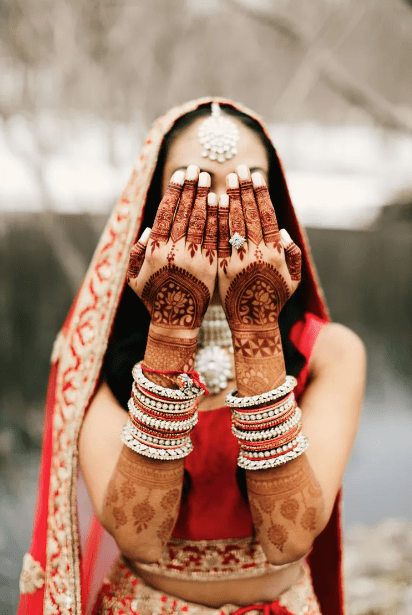
“These mango-shaped designs are versatile and can be decorated in many ways on the inside and outside of the design,” Savla said. “The origin of the shape symbolizes luck with fertility, but has now become a staple design and symbol in Indian fashion and art. Placement of the paisley can be seen on the hands and feet.”
Savla goes on to explain that aside from the hands, the feet are also a spiritual place to get henna. “Just like the hands, getting henna on the feet is said to help cool the nerves with its herbal remedies, Savla said. “Designs on the feet vary but usually share the same aesthetic as the designs done on the hands.” She, however, warned that in come cultures, using religious symbols and designs on the feet may be disrespectful. She added that the application of henna to the hands and feet is said to have nerve-calming properties which are often welcomed by the bride and groom who are often a bit nervous before the ceremony attended by so many people.
“Usually, the darker the shade of henna, the longer the design will last. Savla continued, saying that one would usually get more color on the warmer parts of the body—especially the palms, She shared that designs on the palms are usually most intricate and sometimes draw out a story using symbols and illustrations of the bride and groom.”
Another Hindu tradition at weddings involves the couple taking seven steps for the Saptapadi. Sonal J. Shah, a wedding planner for the South Asian community in the U.S, said, “Someone from the wedding party, typically the groom’s brother, will spread out seven stones in a straight line, and the couple will move from stone to stone, touching each with their toes, as the pandit, reads the seven verses.”
The verses they recite show faithfulness and devotion to one another. The groom, Arun Gopal, stated, “I loved this part of the wedding because it brought me closer to my family values.”
Another important component of weddings is the dance performances. The dance performances are colorful and sometimes the couple will do a dance on the dance floor. The most popular type of dance is garba, which is a traditional Hindu folk dance from the state of Gujarat, India. In some cases, the cousins will perform a dance for the audience. The significance of the dances is to get the audience to serenade the newlyweds. Many couples will dance to bhangra, which is a type of Indian style of music.
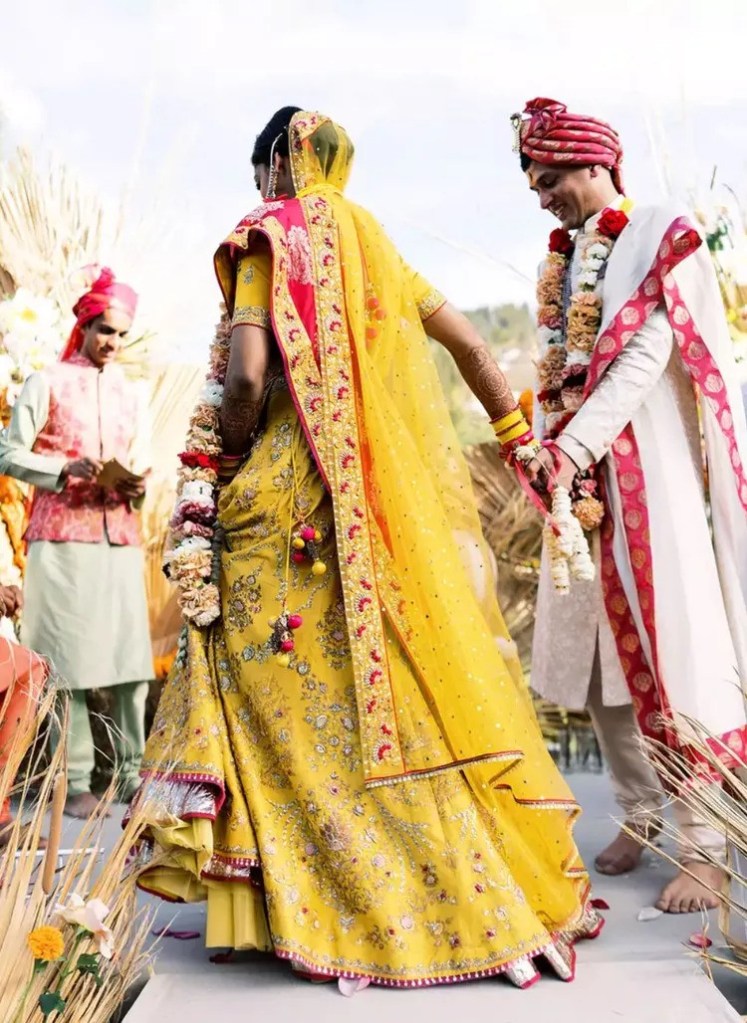
Almost as attention-getting as the dances are the dancer’s outfits. “Traditionally, a South Asian bride will wear a red sari or a modern lehenga to be wrapped in on her wedding day, “says Jignasa Patel. “The beautiful patterns and richness of the color with gold embroidery in her outfit symbolize commitment and fertility.” However, many modern brides also choose to don a variety of rich, saturated hues, from pastel floral prints to bright yellows and bold blues emblazoned with sumptuous embroideries. This shows the variety of colors that the bride wears.
Whether it be the dances, the clothes, the henna designs adorning the hands and feet or the ceremonial traditions themselves, an Indian wedding is a memorable event.
 THE BEAR FACTS