
By Natalia Siewczynski ’28
As a phone’s glow radiates into our eyes, we are engulfed into its gleam. Saturated apps and scrolling entertainment fill our pupils, concealing the dark truth of technology in disguise of light. Teenagers exchange sun rays for the glimmer of false reality, leading us to forget the beauty of nature.
Today, 50% of teens admit to having an unhealthy relationship with their phone, and 27.1% suffer from anxiety and 25.9% experience depression. According to research by authors Zach Rausach and Jonathan Haidt, who study the connection of social media to the decline of mental health, since 1975, teenagers spend 29.4% less time outdoors. We are in a mental health crisis. We cannot stop avoiding the question of why and how to fix it.
In a recent survey with seven Ursuline Sophomores, the students state how most of their free time is spent indoors, with social events frequently being held at restaurants and friends’ houses, while their alone time is also spent indoors, scrolling social media or watching a show. Outdoor social events are rare but appreciated. As they explain, they love doing activities outside, but it always ends up being easier to do something indoors.
As we limit ourselves to fast-paced forms of entertainment while being indoors, we continue to struggle to find an interest in outdoor activities, making it easier to circle back to short-term entertainment, like TikTok and Instagram. Finding more activities for teens outdoors could reshape stress among students at Ursuline and lead us back to enjoying natural light.
About 10 minutes away from Ursuline sits the beautiful Raincatcher Garden of Midway Hills. In late 2014, Midway Hills Church presented a blank canvas of land to the Dallas County Master Gardeners (DCMG), and only a year later, they had their first production of flowers and vegetables.
Since then, the Raincatcher Garden has been further developed, providing an opportunity for locals to learn about the beautiful process of gardening. The Raincatcher Garden now stands as one of two research demonstrations supported by the Dallas County Master Gardeners, under the umbrella of Texas A&M.
Jon Maxwell, Dallas County Master Gardener and volunteer, explains that “the Raincatcher Garden is comprised of many gardens, as vegetables are harvested in beds and in the ground while the Raincatcher Garden also plants a variety of flowers.” All vegetables are later donated to North Dallas Shared Ministries.
This past year, Raincatcher Garden donated 1,000 pounds of produce to the Shared Ministries. In addition, the other 18 projects supervised or owned by the DCMG raised almost 26,000 pounds of produce total, which is equivalent to the weight of six Broncos.
Despite Raincatcher’s success, the garden still suffers from a disconnect to the teenage audience, as Maxwell states that “we would love to see more of high school students, but we don’t see many of them, which is unfortunate.” He does go on to highlight the many visits to DCMG sponsored gardens from grade school audiences, especially at the Anne Frank Elementary School Garden, Armstrong Elementary School and Lakewood Elementary School Garden, as they teach a course on planting and composting for young school kids.
Maxwell and Beverly Alice, head of the Raincatcher’s vegetable team, discussed their perspective on how high school students could benefit from volunteering at the garden as the reward of gardening sprouts from the selfless act of providing for others. Alice explains “there is a lot of satisfaction in taking a seat and watching something grow and produce food for others.”
She shares that the 20 volunteers who come out to the Raincatcher Garden every Monday are united by a shared purpose, stating that “we can just clear aside all our other cares and focus on growing food for others.” Through community, the volunteers can take one pack of seeds and produce nutrients for countless others.
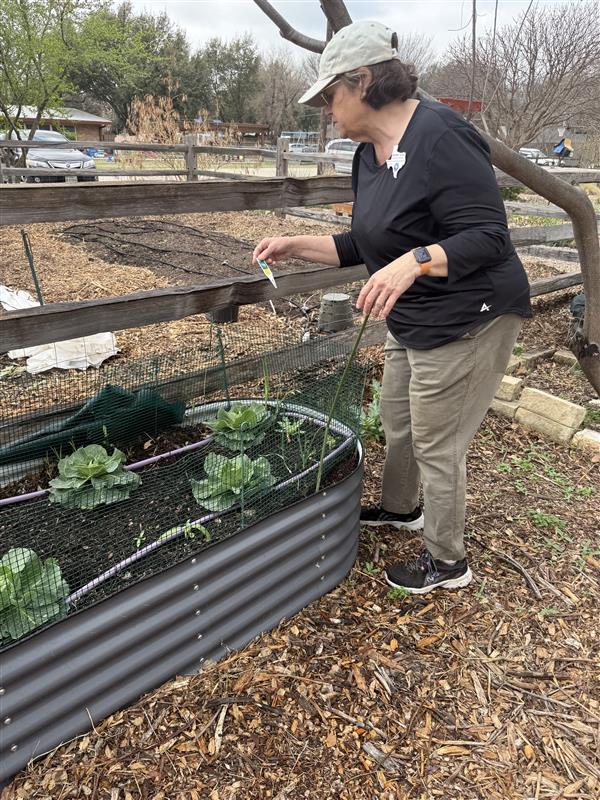
Maxwell also discussed his thesis on the disconnect of teenagers, stating, “we are a throwaway society. Constantly getting something new and when it breaks, you throw it away,” he says. “[Teenagers] don’t see what goes on inside producing something.”
By constantly searching for the new and shiny, we forget to enjoy the process as we scavenge for the end result, but sometimes the reward comes through those difficult parts of the journey.
Alice adds that the process of gardening and planting new vegetables has made her more open to the new, as she ventures out to trying different produce after seeing the beautiful process of its growth through gardening.
The fast-paced algorithm of TikTok and other social media platforms continues to augment the struggle for teenage audiences to appreciate a slow process. Through gardening, we can return to enjoying the satisfaction of a process that creates something beautiful and its ability to introduce something new.
Maxwell states that Raincatcher Garden will continue creating opportunities for teenagers to appreciate the art of gardening, as they provide classes on produce, flowers and other plants, while also displaying a variety of service opportunities.
His love for gardening sprouted after retiring from his 11-year career at International Business Machines Corporation (IBM), which is a global technology and consulting company. After retiring, he regretted how much time he had spent indoors during his life and was searching for a way to rectify his relationship with nature, which made him start his journey to become a Master Gardener and later discover his love for flowers.
When many people retire, there is usually a similar response, as they long to rejuvenate their love for the outdoors, but Maxwell states, “it’s funny that we wait till that point in life to get involved because then you have to learn everything with not a lot of time to live it out.” He communicates that teenagers could have more experience and time to enjoy the beauty of God’s creation by taking up an interest in nature earlier on in life, instead of waiting.
While artificial light continues to overtake our eyes, Ursuline students strive to create opportunities to look up from their laptops and push aside school stress. Through the Ursuline Environmental Club, led by Caroline Fent ’26 and Kelly Casey ‘26, the seniors establish an outlet for students to indulge in the beauty of nature while teaching club members how to nurture the Ursuline Community Garden. Despite their invitation to educate on the outdoors, the girls discuss the absence of interest this year, explaining that “sadly, we haven’t been able to work in the garden. This is mostly because we don’t have many active members in the club, so it’s been difficult to find people to help us tend to the garden.”
As seniors, the girls are also in constant scavenge to find students who are passionate about nature and capable of running the club after they graduate. They will continue their hunt for harvesters throughout the rest of the school year, but the price of our reliance on technology reveals itself as their hopeful aspirations to increase community and sisterhood through the garden dwindle.
The Dallas community is also persistent in finding ways to get younger generations more excited about being outdoors.
The local Casa Linda Village Starbucks donates bags of coffee grounds to their customers for composting, hoping to spread positivity and community through the coffee shop.
Dallas also offers a class to become a Dallas County Master Gardener. The yearly course takes place for about 4 months. Candidates have one class per week either online or in person at the DCMG facility in Garden, which is also sponsored by Texas A&M.
After completing the course taught by Dallas entomologists, biologists and agronomists, the DCMG candidate takes an open-book test. If they pass, they then complete a minimum of 50 volunteer hours at various projects throughout the city, gaining their certification as a Dallas County Master Gardener and earning the responsibility of a certain amount of service hours and education per year. By taking advantage of the opportunities Dallas provides, local teenagers can reinstall nature into their daily life.
Another beautiful outdoor organization is the non-profit Texas Discovery Gardens. Located in Dallas’s historic Fair Park, 7.5-acres of organic land is complimented by a variety of Texas native and adapted plants, as the Texas Discovery Gardens present an experience for everyone. While offering a year-ground garden, it also captures transformative and engaging indoor experiences, including the Rosine Smith Sammons Butterfly House and an Insectarium.
In 1936, the garden was named The Hall of Horticulture, built in association with the Texas Centennial Exposition, presenting the first public conservatory to the Southwest. The garden reached numerous milestones as they offered Dallas locals new insight into the beauty of nature and constructed the four “Houses of the Future” to record the current trends in house architecture. Later, when the Centennial Exposition ended, the garden was renamed The Dallas Garden Center.
From then on, the garden went through many renames, remodels and new additions, establishing the garden we know and love today. Texas Discovery Gardens now stands as the first certified 100% organic public garden in the state of Texas.
The Texas Discovery Gardens team continues to search for new plants and exhibits, aiming to offer fun experiences for Dallas locals.
A beloved and inviting experience offered by the garden is The Discover Gallery. The garden’s exhibition showcases different creative art pieces that invite locals to understand environmental topics in a new format.
One mural painted by Laney Green, a participant in the 2017 Mural Contest and former intern for The Discovery Gardens, is showcased in the EarthKeepers Room and was installed in 2017. Through different color pallets and symbols, the female artist embodies the four Texas eco-regions, teaching Texans about our own backyard.
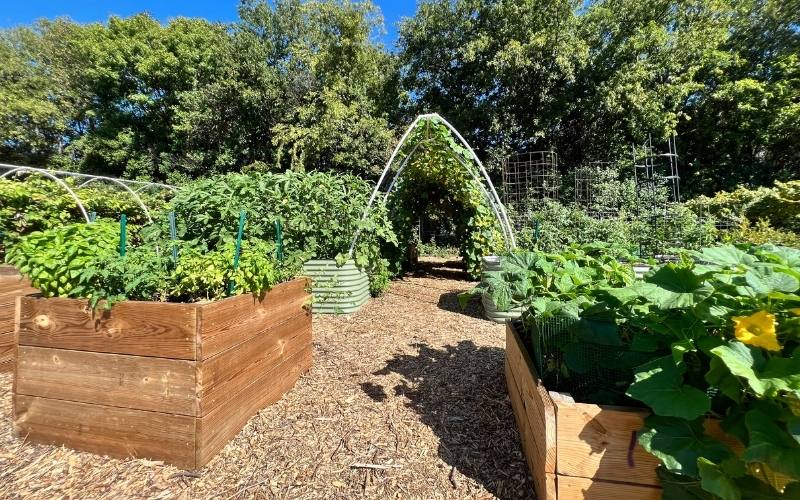
The garden takes additional strides to attract teenagers as they offer numerous service events and new knowledge about gardening on their website, inspiring younger generations to be interested in the wonders of nature.
On weekdays and weekends, the garden hosts multiple volunteer opportunities, including signups to be a Butterfly House Docent, take on a role as Garden Train Conductor and Guide, or help out on Tuesday Garden Workdays. If you are interested in nature and animals, check out the Reptile Resort Docent opportunity, or if you love kids, sign up to help the garden on Homeschool days!
The garden also has an active blog, aiming to educate people on the beauty of planting. In 2022, the site posted a list of recommendations on which flowers are best for butterfly gardens, complementing the beauty and necessity of flowers like lavender and marigold.
By visiting these local Dallas gardens, including the Raincatcher Garden, Texas Discovery Gardens and our very own Ursuline Garden sponsored by the Environmental Club, students can trade in fatigue caused by false comparison and too much time checking Backpack grades for the scenic charm offered throughout local gardens in Dallas. As Audery Hepburn put it, “To plant a garden is to believe in tomorrow.”

